


SAIPAN SUGARCANE RAILROAD RUN TO RETRACE HISTORY ON JAN. 17
Saipan, Northern Mariana Islands (NMI) — Thirty runners from Japan and The Marianas take on the anticipated 10-hour Saipan Sugarcane Railroad Journey Run 81K on Saturday (Jan. 17), retracing the historic sugarcane railway route that once crisscrossed Saipan during the bustling days of the Japanese administrative period in the early 1900s.
A journey run traditionally focuses on mental and physical endurance, versus speed or distance. This Saturday’s run, jointly organized by Sports Aid Japan and the Marianas Visitors Authority (MVA), commemorates the 150th birthday of Haruji Matsue, the legendary “Sugar King” who led the development of the Marianas’ sugar industry and who planned the railroad route.
“Reviving this historic railway route alongside our partners from Japan holds meaning for both our community and our tourism industry,” said MVA Managing Director Jamika R. Taijeron. “This journey run brings the Marianas’ Far From Ordinary brand to life by connecting athletes and visitors to the stories, landscapes, and shared history that makes our islands unique. As we continue improving our tourism products, we will explore the potential for growing this event, as it strengthens our ties with Japan while creating new experiences for visitors.”
The race starts and finishes at Micro Beach, American Memorial Park, Garapan. The starting ceremony will be held at 4:30 a.m., with the race “departing the station” at 5 a.m. The finish line closes at 9 p.m.
“We anticipate that runners will be on the course from pre-dawn until after dark,” said MVA Community Projects Manager Martin Duenas. “We ask everyone’s cooperation in making this inaugural race a safe success by restraining pet dogs along the route on Saturday and staying alert for runners along the road throughout the day. We appreciate everyone’s support!”
During the endurance run, participants will also have the opportunity to fortify themselves with authentic local food at aid stations manned by local agencies and businesses. At the bottom of Mt. Tapochau, Saipan Mayor’s Office will share sugarcane, coconut sashimi, and more. On Capitol Hill, the CNMI Historic Preservation Office and Dept. of Community & Cultural Affairs will share fish kelaguen and spirits. At Banzai Cliff, Saipan Unity Lion’s Club will offer a variety of fresh fruit. At Micro Beach, National/Alamo Rent a Car will have barbecue and additional local dishes. Additional water stations will refresh runners along the journey run. Additional event sponsors and supporters are Dept. of Public Works, Dept. of Public Safety, Div. of Parks & Recreation, and Dept. of Fire & Emergency Medical Services.
Safety, self-sufficiency, and respect for the Marianas’ natural and historical heritage are top priorities for the race. Participants must navigate using official course maps, pass all checkpoints, and carry mandatory night gear and cell phones. The official course map is available at: https://shorturl.at/HQ9j5.
The story of The Marianas is a rich tapestry, woven from the heritage of the indigenous Chamorro and Carolinian people, and seasoned by centuries of Spanish, German, Japanese, and American influence. During the Japanese era, The Marianas was a major hub for sugarcane cultivation, with a legendary 50-mile (80.5 km) narrow-gauge railway encircling Saipan, transporting sugarcane and goods—a legacy with remnants still found through the island’s landscape. Similar railways once ran on the neighboring island of Tinian and Rota.
For more information, contact MVA Community Projects Coordinator Ed Diaz at [email protected], call 1.670.664.3200, or visit the Marianas Calendar at http://www.mymarianas.com.
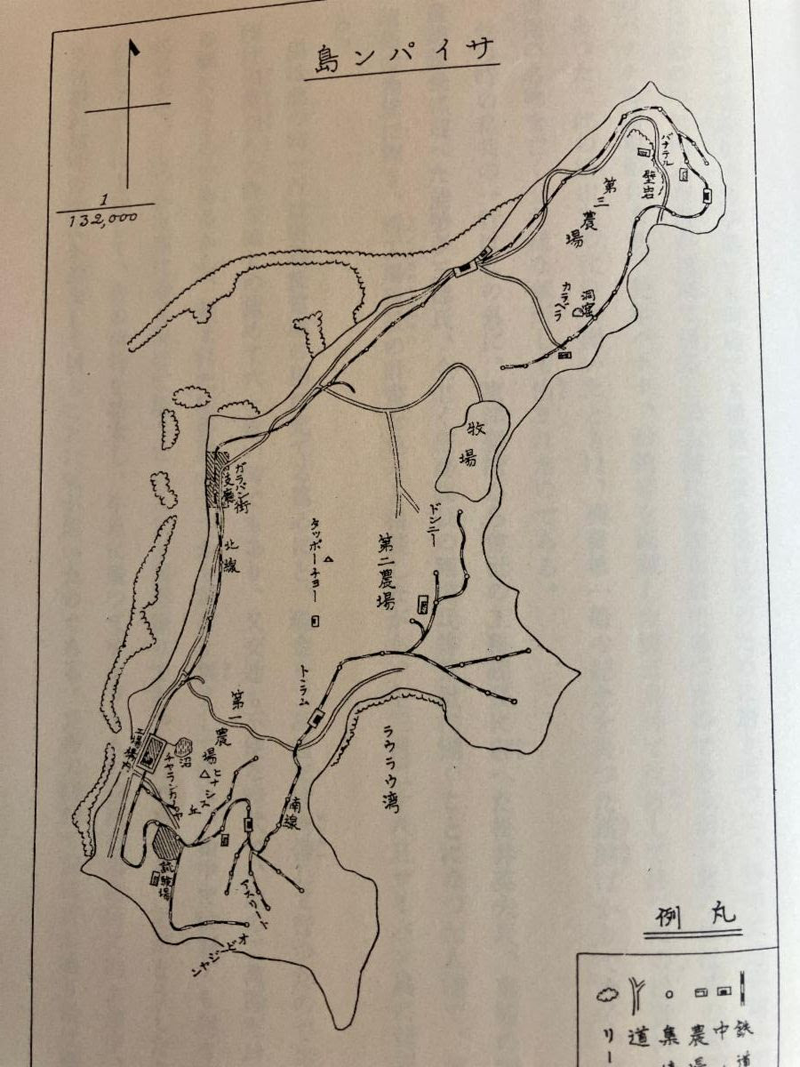
This 1932 handsketched map of railway construction in Saipan is believed to have been drawn by Haruji Matsue, himself, the legendary “Sugar King” who developed a sugar production industry in the Marianas and its accompanying 81KM railroad system. Matsue and the sugarcane industry era will be commemorated in the Marianas this month with an exhibit at the Northern Mariana Islands Museum of History & Culture from Jan. 15-23, 2026, and the Saipan Sugarcane Railroad Journey Run 81K on Jan. 17, 2026.
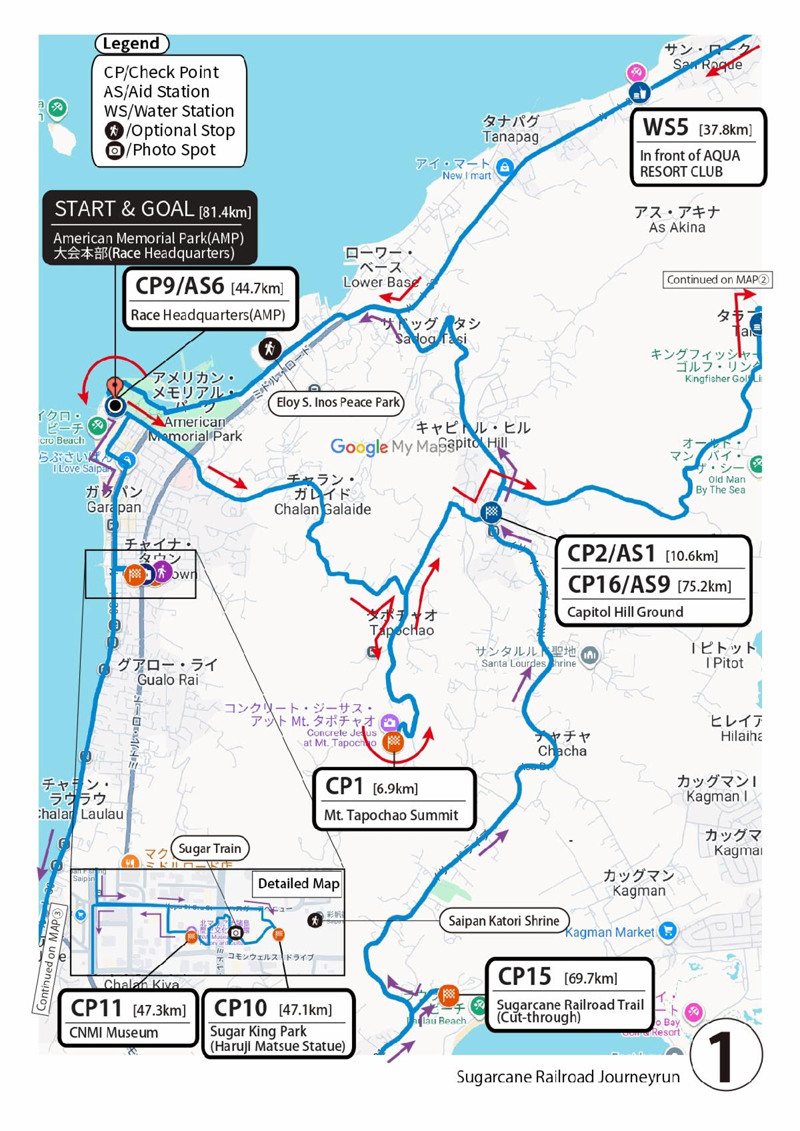
The estimated 10-hour Saipan Sugarcane Journey Run 81K on Jan. 17, 2026, in the Marianas will crisscross the island from Marpi to Koberville, retracing the historic sugarcane railway route that once crisscrossed Saipan during the bustling days of the Japanese administrative period in the early 1900s.
The Marianas is an archipelago of 14 islands - including Saipan, Tinian, and Rota - in the Western Pacific. The Marianas are home to indigenous Chamorro and Carolinian people, as well as over 20 different ethnicities from around the world who live and work in this harmonious tropical paradise. Ancient latte stone limestone monoliths, traditional nature-based ocean navigation not reliant on modern technology, and a culture seasoned by East and West influences are just a few of the experiences found in The Marianas, where pristine sea, sand, and skies are only a 3–4-hour flight from major Asian gateway cities. From Korea Republic, Jeju Air and T’Way provide direct flights to Saipan from Seoul-Incheon. United Airlines flies three times a week from Tokyo-Narita, Japan, and daily from Guam4. Hong Kong Airlines flies twice weekly from Hong Kong, China. Interisland travel between Saipan, Tinian, and Rota is provided by Star Marianas Air and Micronesian Air Connection Services. For more information on The Marianas. visit www.mymarianas.com, Facebook/VisitTheMarianas, or Instagram @themarianas.